2. World Map: The Cohort Journey
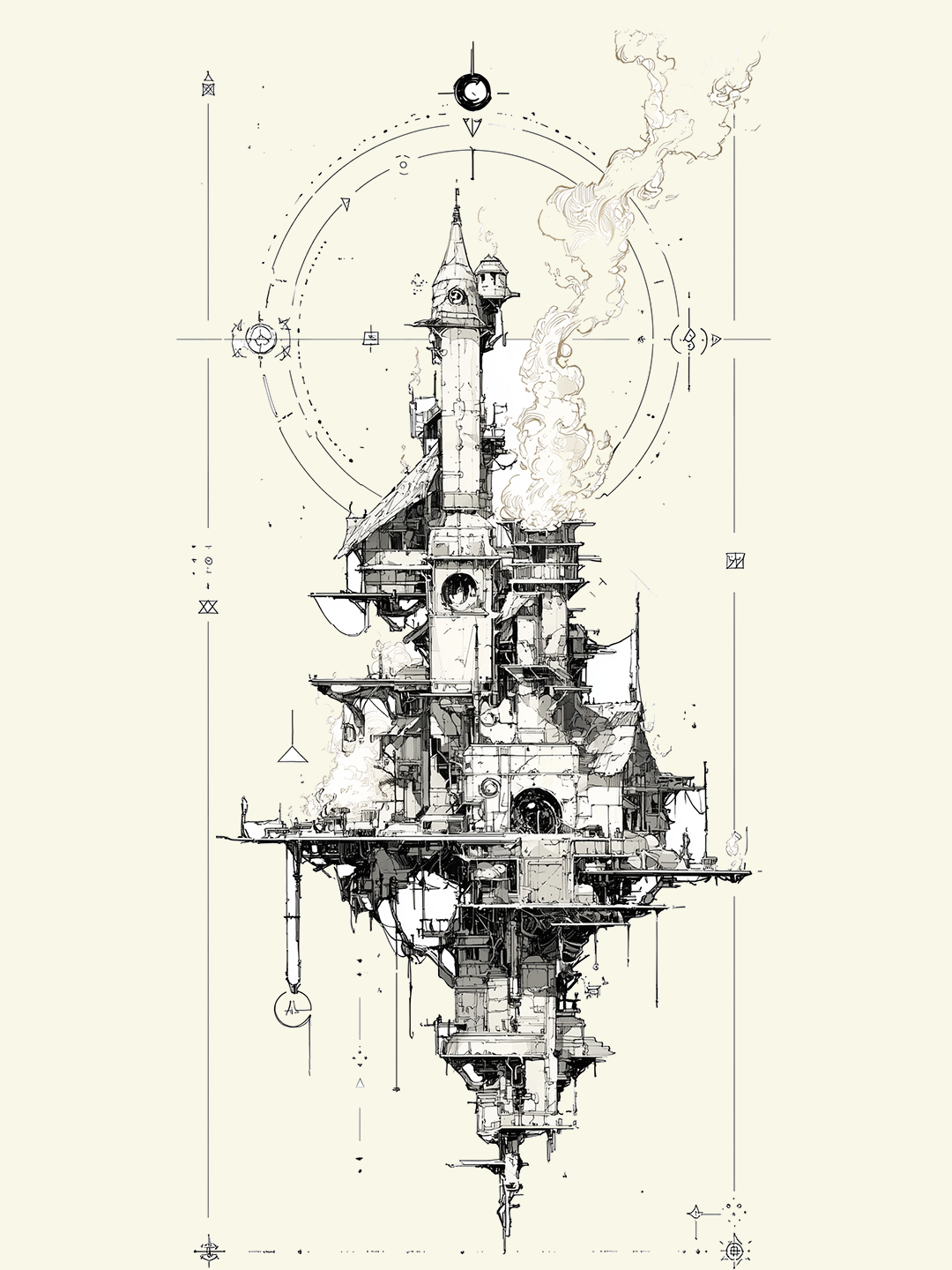
The Cohort Journey follows a monthly arc built around an intensive, highly interactive first week, followed by three weeks of async collaboration. This rhythm gives participants a strong social foundation early, then the freedom and agency to build at their own pace — the same way RaidGuild itself operates.
The world map below outlines the full path, including the day-by-day flow of Week 1.
 Region I: The Gate of Entry
(Week 1 — Live Interactive Sessions, 1–2 hrs/day)
This is the “arrival at the tavern” phase — immersive, social, high-touch — where participants meet each other, understand the culture, and begin thinking like Raiders.
Day 1 — Welcome, Introductions & Theme Reveal
Participants get to know each other, learn how the Guild operates, and receive the month’s theme.
Focus:
- Who’s here? What are their skills?
- What is RaidGuild? (culture, structure, expectations)
- What is this month’s theme?
- What does success look like?
DM Objective: Set a welcoming tone. Establish belonging. Make it clear that this is a collaborative journey, not a hackathon.
Day 2 — Raider Showcase (Monthly Standup)
Cohort members sit inside RaidGuild’s monthly all-hands.
This is the moment when participants “see behind the curtain.”
What they experience:
- Status updates from active RAIDs
- RIPs reporting on progress
- OGs sharing new ventures, experiments, freelance work, governance updates
- A cross-section of the entire Guild’s heartbeat
- Areas where help is needed
- Momentum, culture, and expectations in practice
This is the point where many participants decide whether the Guild “clicks” for them. RG runs in a decentralized, self-directed, high-agency way — and this is where that becomes real.
DM Objective: Let them witness the living organism of RaidGuild. No explanation is as powerful as the lived experience.
Day 3 — Demo Day (Previous Cohort) + Theme Ideation Kickoff
Cohort members watch the final demos from last month’s builders.
What this accomplishes:
- Sets the bar for what “shipping” means
- Shows the diversity of valid projects (tools, MVPs, research, ops improvements)
- Establishes continuity between cohorts
Afterwards:
- Begin guided ideation around this month’s theme
- Introduce preliminary use cases
- Warm-up brainstorming exercises
DM Objective: Inspire the new cohort with real projects. Show them what is possible. Then start nudging them into creative mode.
Day 4 — Deep Dive + Divergent Ideation Workshops
A major exploration + creativity day.
Activities may include:
- Meme Driven Development
- Social icebreakers
- Hands-on theme deep dive
- Technical brown bag / lightning talk
- Creative breakouts
- Use-case brainstorming
The goal: generate a wide range of divergent ideas. Homework: bring back one wildcard or unconventional idea.
DM Objective: Spark creativity. Lower social friction. Push people to think bigger and stranger.
Day 5 — Convergence & Team Formation
Today, divergent ideas converge into actual project paths.
Goals:
- Align on 1–3 viable project directions
- Form teams with balanced skill sets (product + front-end + back-end + ops/PM)
- Agree on initial roles
- Define early scopes
By the end of Day 5, the cohort has:
- Teams
- A project direction
- A sense of momentum
DM Objective: Facilitate matchmaking and alignment. Gently guide toward commitment and clarity.
 Regions II–IV: The Async Buildlands
After the intensity of Week 1, the cohort shifts into asynchronous execution — mirroring how real raids operate inside RaidGuild.
 Region II: Planning & Specification (Week 2 — Async)
This week is about establishing the foundation.
Common Activities:
- Finalizing team roles
- Writing the product spec
- Setting up repos, tools, and PM boards
- Establishing communication patterns
- Early research & prototyping
- Optional office hours with hosts
DM Objective: Keep teams unblocked and aligned. Encourage early clarity to prevent Week 3 chaos.
 Region III: Implementation & Iteration (Week 3 — Async)
Teams work mostly independently, checking in as needed.
Work includes:
- Active development
- Iteration on prototypes
- Integrating feedback
- Polishing UI/UX
- Drafting early demo materials
DM Objective: Encourage momentum. Connect teams with mentors. Keep teams honest about scope.
 Region IV: Polish, Testing & Demo Prep (Week 4 — Async)
The final push before Demo Day (held during the next cohort’s Day 3).
Activities:
- Testing
- Bug fixing
- Preparing demo flows
- Writing decks
- Rehearsing presentations
DM Objective: Help teams focus on delivering something usable, visible, and real — even if scrappy.
 Region V: The Arena (Demo Day — Next Cohort, Day 3)
Demo Day happens during the next cohort’s Week 1, creating a bridge between generations of Raiders.
Outcomes:
- Present live demos
- Evaluate projects
- Award Raider of the Month
- Decide on membership sponsorships
- Celebrate wins
This ritual creates continuity, connection, and shared culture.
Summary Timeline
| Phase | Format | Activities |
|---|---|---|
| Week 1 | Fully live | Orientation, Raider Showcase, demo day, ideation, team formation |
| Week 2 | Async | Specs, planning, comms, repo setup |
| Week 3 | Async | Building, iteration |
| Week 4 | Async | Polishing, testing, demo prep |
| Next Cohort Week 1, Day 3 | Live | Demo Day |